


Arion Ho, Founder of ENI: From Traditional Finance Titan to Web3 Infrastructure Pioneer
- 香港卫视网
- 2026-04-07 11:55:40
-
 收藏
收藏
On the main stage of Consensus HK 2026—Hong Kong’s premier Web3 summit—Arion Ho, Founder and CEO of ENI, calmly unveiled the project’s latest milestones to a global audience: over 3.2 million mainnet addresses and more than 14 million cumulative transactions. With over two decades of experience spanning traditional finance and blockchain, Ho is now steering ENI as a benchmark for institutional-grade blockchain infrastructure through a unique “compliance + innovation” dual-engine strategy, redefining how real-world assets (RWA) integrate with Web3.From
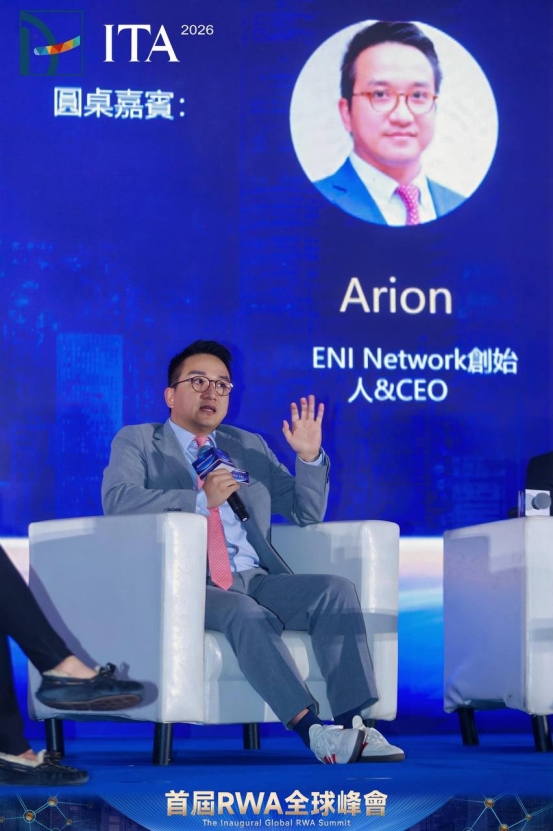
HKEX to ENI: Where Financial DNA Meets Blockchain Ambition
Ho’s career began at the pinnacle of traditional finance. His tenure at top institutions—including Hong Kong Exchanges and Clearing (HKEX), UBS, and Standard Chartered—gave him deep insight into capital markets and exposed systemic vulnerabilities. “The fragility, inefficiency, and trust costs of centralized systems have always been a Damocles’ sword hanging over traditional finance,” he reflects. This realization became the catalyst for his pivot to blockchain.As compliant digital asset markets emerged, Ho recognized a transformative opportunity. Through roles at OSL and Zodia Markets, he explored embedding blockchain into regulated financial environments. This cross-industry journey crystallized his core belief: “Blockchain’s true value lies not in disrupting finance, but in injecting decentralized trust into the existing system.” This philosophy gave birth to ENI—a Layer-1 blockchain purpose-built for RWA tokenization.Engineering Breakthroughs: Solving Web3’s “Impossible Triangle”
In the Web3 space, Ho stands out as a pragmatic engineer who rejects hype. Under his leadership, ENI has tackled foundational industry challenges:
Balancing Performance and Decentralization:
With its proprietary EniMatrix architecture and HOPE Hyper-Parallel Engine, ENI achieves over 5,000 TPS on a single chain while maintaining financial-grade security—a feat Visa’s engineering team hailed as “redefining public chain performance standards.”
Compliance and Data Sovereignty for Institutions:
ENI pioneered a dual-layer “AppChain + Mainnet” design: the mainnet provides liquidity and security, while AppChains grant enterprises full control over their data. This innovation made ENI the world’s first blockchain project certified under ISO/IEC 27001, securing partnerships with Standard Chartered, NTT, and others.
Bridging Real-World Assets On-Chain:
Focused on practical RWA use cases, ENI developed smart contract templates for complex financial instruments and successfully supported Malaysia’s government in executing the country’s first blockchain-based real estate fund tokenization pilot.
“Compliance-Friendly Innovation”: Building Bridges Between TradFi and Crypto
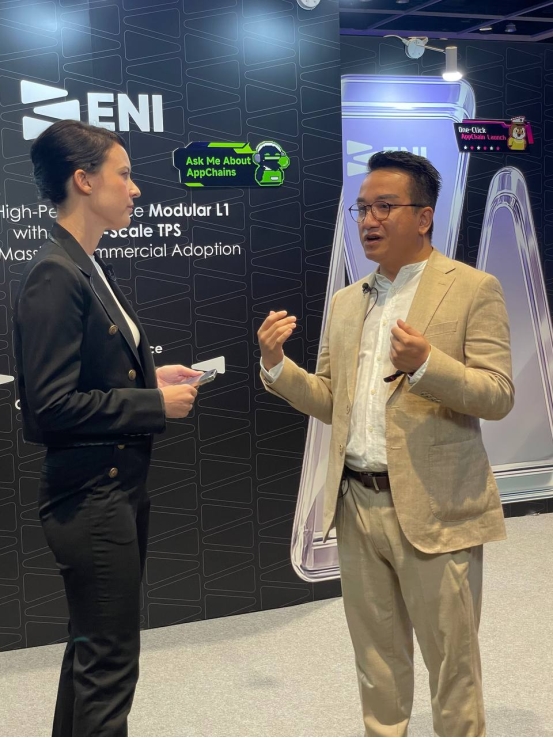
As Vice Chairman of the Malaysia-Asia Pacific Council of Trade & Investment (MAPCOTI), Ho actively advocates for blockchain policy adoption and cross-border integration. He asserts: “Web3’s future depends on its ability to coexist with the existing economic order.” ENI embodies this vision—engaging in technical dialogues with multiple central banks to enable interoperability between central bank digital currencies (CBDCs) and blockchain networks. Its roadmap targets integration with the top five global CBDC networks by 2027.Steadfast Amid Controversy: A Long-Term Visionary
While the industry chases short-term trends, Ho remains strategically disciplined. He has publicly criticized the notion that “tokenized governance equals decentralization,” arguing instead that “codified rules” are the essence of true decentralization. Drawing from his experience as former COO of a financial holding group, he insists every ENI DApp must pass a “revenue validation test” to ensure commercial sustainability. This pragmatism has granted ENI remarkable resilience: its TVL volatility is just one-third of the industry average, and institutional clients account for 62% of its user base (Chainalysis).Vision and Mission: Building a “Code-Defined Financial World”
At the dawn of Web3’s next chapter, Ho’s ambition is clear: evolve ENI into a “modular blockchain operating system” that allows enterprises to deploy blockchain applications as easily as building websites. “Blockchain should not be a toy for crypto enthusiasts,” he states firmly. “It must become the next-generation financial infrastructure serving the real economy.”With deep roots in traditional finance and a forward-looking Web3 vision, Arion Ho is now building an unprecedented bridge—written in code and anchored in compliance—between the physical and digital financial worlds.
相关推荐
对非法烟草生产的大规模严打行动揭露假冒商品
推荐 2026-07-07 14:22:10開元雲科技中標北京智源人工智能研究院項目
推荐 2026-07-07 14:05:30What Is YesorNo? A Beginner’s Guide to Prediction Markets
推荐 2026-07-02 10:50:29转战数字资产赛道,Arion Ho 操盘 OSL 英国业务,打通传统银行与数字资产合规通道
推荐 2026-07-02 09:24:03电子认证新规落地 e签宝CA持牌持续引领行业规范发展
推荐 2026-07-01 17:01:19热门资讯 日 周 总
泰山冠顶!吴珈庆力克郑肖淮,加冕台球史上首位"千万先生”,闪耀全球台球赛事最高殿堂!
节目 2026-06-30金曲奖提名破纪录!网易音乐人裘德《银色荒原》荣获最佳编曲人奖
节目 2026-06-29AI浪潮重塑臨床研發:CPHI China 2026「AI加速藥物臨床試驗」論壇全景紀實
节目 2026-06-27健康相伴 公益同行|粽香传情护肌肤,专业科普守护老年皮肤健康
节目 2026-06-24【健康相伴·公益同行】成都市海通药业联合 神仙树社区开展端午健康民俗主题活动
节目 2026-06-24健康相伴 公益同行(贵阳站·第六期)|粽香传安康 科普护肌肤,海通药业深耕基层健康公益
节目 2026-06-24健康相伴 公益同行(贵阳站·第六期)|深耕国民营养科普 岳阳新华达以公益力量赋能老龄健康建设
节目 2026-06-24开元雲隨貿促會走訪東盟
节目 2026-06-24中關村科金亮相香港車博會,建構汽車產業全球化智能服務新基座
节目 2026-06-23中央圣马丁05后新锐设计师刘泳铤Ivy算力珠宝,作品登陆永乐春拍创造历史
节目 2026-06-22"海外翻译与传播应用能力培养计划”第二届社长总编辑国际传播交流会在京举行
节目 2026-06-21輕斷食兼顧腸道健康?超營 73獨立鋁箔粒裝隨時補益生菌
节目 2026-06-12全球科技企业上市热潮升温之际,FNXI賦能相愛进入资本市场沟通最后阶段
节目 2026-06-12夏季追賽動起來!iHerb精選9款活力補給好物,限時折扣最低7折起!
节目 2026-06-12全新奔驰纯电GLC SUV背后的豪华智造哲学
节目 2026-06-09- 百达翡丽官方售后体系焕新 2026 指定维修中心地址一览2026-06-05
- 健康相伴 公益同行|成都海通药业走进致强社区 以专业守护市民健康2026-06-05
- 成都海通药业走进民乐村社区 守护长者下肢血管健康2026-06-05
- 健康相伴 公益同行|成都首场本土公益活动落地致强社区 海通药业以专业守护市民健康2026-06-05
- 加密原生高管入选《财富》最具影响力女性,奠定行业里程碑地位2026-06-03
- AI+教育 | 現代物流集團AI培訓進行時2026-06-02
- 開元雲受邀出席2026世界智能大會2026-06-02
- Anthropic估值近万亿凸显AI平台需求高涨,FNXI助力相愛冲刺纳斯达克上市2026-06-02
- 扎根香港 布局全球 引領醫療科創 元化智能进驻香港港深创科园2026-05-28
- 双院长做客武汉美莱《时尚气质微整颜究所》 拆解童颜抗衰与 T 区精雕美学密码2026-05-25
- 香港優才及專才協會辦「資優教育論壇」 聚焦資優教育新趨勢,攜手共育未來棟樑2026-05-25
- 宁德海博特医与一棵茶股份三大里程碑引领茶叶籽二酯油产业高质量发展2026-05-22
- 盛会圆满收官 聚力行业升级 —— 第三十三届中国国际乐器展览会助力行业高质量发展2026-05-20
- 智匯齊魯 元啟未來|AI 智慧體智造基地正式啟動2026-05-19
- 电子签名新规落地!3分钟自查,你用的电子签名合规吗?2026-05-19
- 開元雲榮膺 2026 福布斯中國人工智慧商業落地示範企業2026-05-18
- 世界级研发验证试验室启用,中国汽研中汽院(浙江)公司正式开业2026-05-18
- 中美高层握手,香港Space-CNX如何抢占万亿蓝海?2026-05-18
- 北京国际乐器展盛大启幕 国乐西乐交融绽放乐器文化新魅力2026-05-15
- AW2026童博会·上海少儿时尚周--全球品牌形象推广大使刘若涵2026-05-15
- 星域破局者:Space-CNX崛起香港,卡位太空能源与低轨经济2026-05-13
- 雁江"护苗”记:一场关于178个孩子的守护实验2026-05-07
- 泡饭POP FRIENDS东莞首店,探索潮玩新体验2026-05-06
- 第四屆"一帶一路”綠色發展故事短影片大賽全球徵稿啟動 以鏡頭為媒傳遞綠色絲路力量2026-04-29
- 深圳礼品展惊现"神展位”!东菱、Glasslock盖朗、CLARA克拉拉等四大品牌合体,玻璃相关产品要成下一个风口?2026-04-28

2010-2020 版权所有 不得转载